The fastest crash and the fastest recovery
In five weeks of early 2020 the market fell further and faster than it ever had from a record. Five months later the record was back. Almost nothing about either half happened the way people remember it.
The year 2020 set two market records that still stand, and they point in opposite directions. Between 19 February and 23 March, the S&P 500 lost 33.9% of its value, the fastest fall from a record high ever measured. By 18 August it was back at a new record, the fastest recovery from a crash of that size ever measured. An investor who fell asleep in February and woke in late August would have found their savings almost exactly where they had left them. They would have slept through the four worst weeks since 1929, the shutting of much of the world economy, and one strange April afternoon on which the price of a barrel of oil fell below zero.
The month the market refused to look
The story as most people tell it is simple. The virus arrived, and the market crashed. The record shows something stranger, which is that the market watched the virus in full public view for a month and decided it did not matter.
Wuhan, a city of eleven million people, was sealed off on 23 January 2020. A week later the World Health Organization declared a global health emergency, and every newspaper on earth carried the story. The S&P 500 responded by climbing for another three weeks, and it set its record close of 3,386 on 19 February.
That was not madness, it was memory. Investors had lived through SARS, swine flu and Ebola, and each time the disease had stayed contained while markets barely moved. The assumption in February was that this outbreak would follow the same script: a hard few months for Chinese factories and the airlines, then business as usual.
What broke the assumption was not new information about the disease but new information about where it was. In the last week of February the virus surfaced in the towns of northern Italy, which meant containment had already failed. The selling began on Monday 24 February. Markets do not move when news happens. They move when belief changes, and belief had just spent a month running behind the facts.
Twenty-three trading days
The fall, once it started, kept breaking its own records. It took six sessions for the index to drop 10% from its peak, which had never happened that quickly from a record before. After Black Monday in 1987, exchanges had installed circuit breakers, automatic halts that pause all trading once the index falls 7%. We told that story in The worst day in market history had no headline. In the thirty-two years since their creation, those breakers had been used exactly once. In March 2020 they were used four times in ten days.
The worst single day was Monday 16 March, when the Dow fell almost 3,000 points, or 12.9%. Only Black Monday itself has ever been worse. A week later, at the close on 23 March, the S&P 500 sat a third below its February record. Roughly a third of the value of every listed American company had vanished in under five weeks.
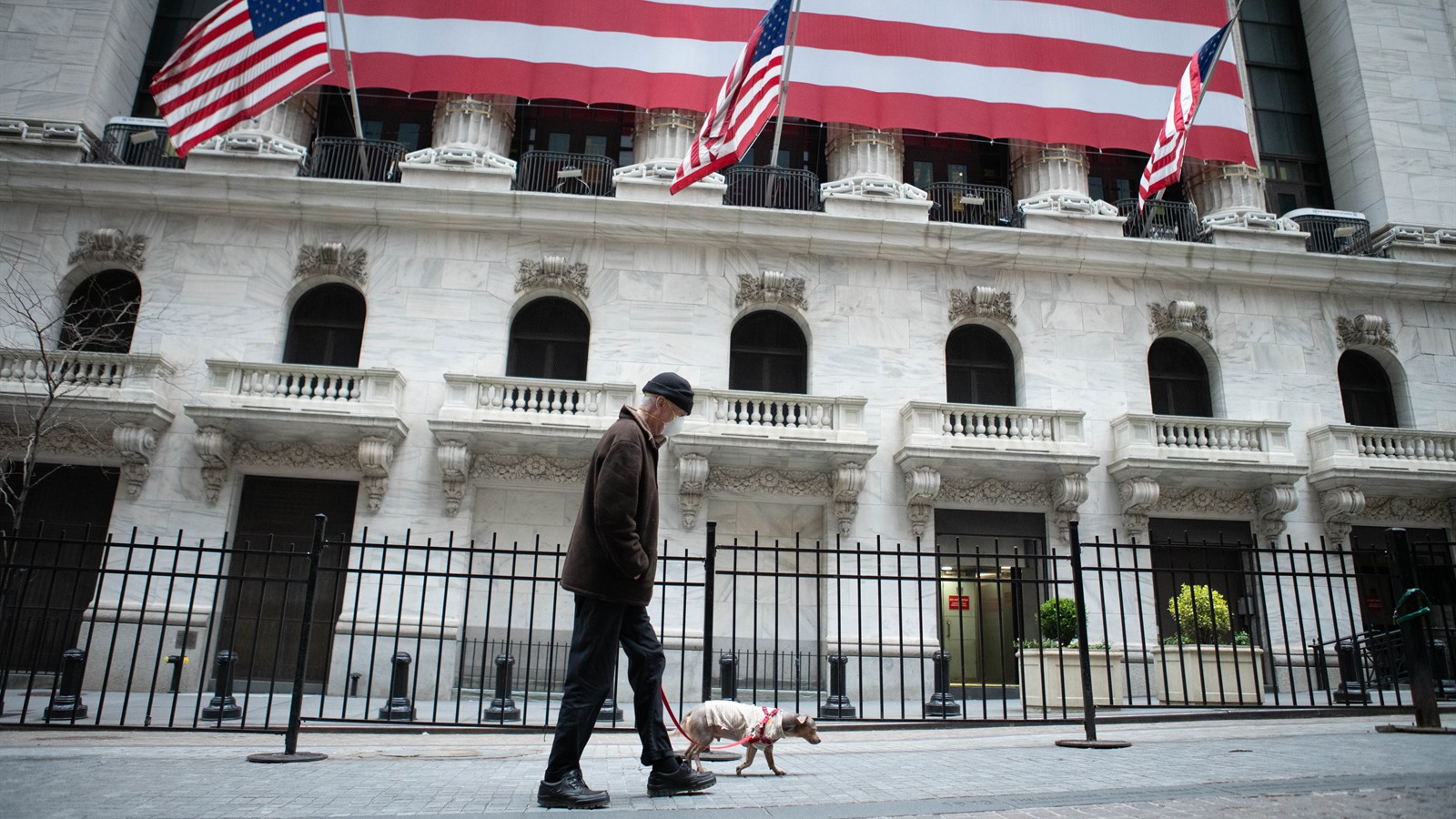
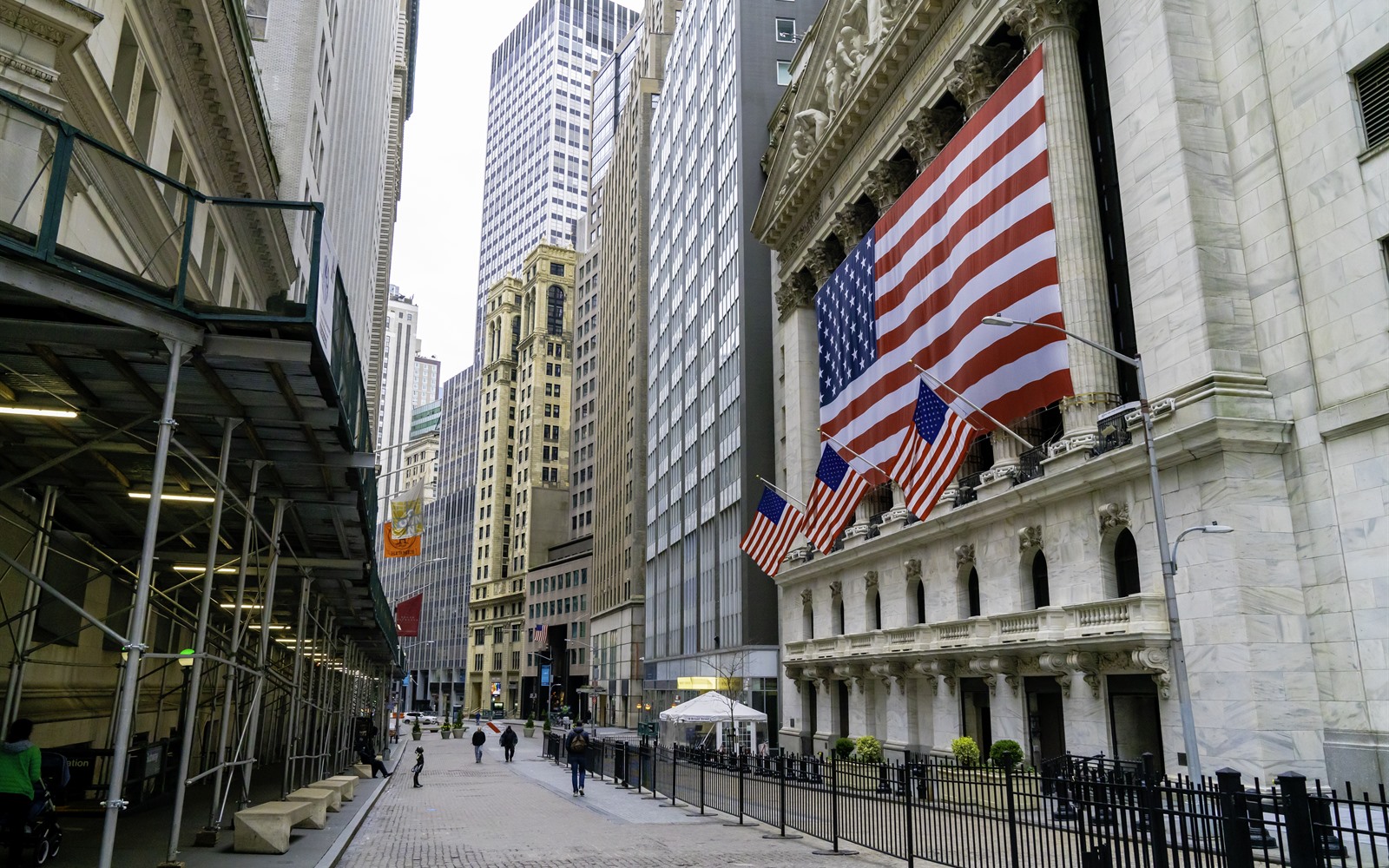
The bottom came with a detail history will enjoy. On 23 March the New York Stock Exchange was running without its trading floor for the first time in its 228 year history, because the floor had been closed days earlier as a health risk. The fastest crash ever recorded bottomed out on screens, in silence.
The turn did not wait for good news
Ask people when the market should have turned, and the sensible answer is when the virus news improved. That is not what happened. On 23 March, by any measure of the disease, everything was still getting worse. Case counts were climbing steeply, hospitals were filling, and most lockdowns were days old. The peak in deaths was still weeks away.
What changed that morning had nothing to do with medicine. Before trading opened, the Federal Reserve announced it would buy government bonds without limit and, for the first time in its history, buy the debt of ordinary companies. It had already cut interest rates to almost zero, the lever we explained in Why interest rates move everything. Even that was not enough to stop one last slide, and the index fell 3% more to close at its low of 2,237.
The answer arrived overnight. The next day, with Congress closing in on a rescue package worth 2 trillion dollars, the Dow rose 11.4%, its best day since 1933. The market had not been waiting for the pandemic to improve. It had been waiting to find out who was going to pay for it.
The recovery looked nothing like one
On 18 August the S&P 500 closed at a new record, 126 trading days after the old one. That number deserves a moment, because after the 2008 crash the same round trip took five and a half years, and after 1929 it took twenty-five. The deepest hole since the Depression era had been climbed out of in under six months.
It did not feel like a boom, because the economy it floated above was in ruins. In April, unemployment reached 14.7%, the worst figure since records began in 1948, and that spring the economy shrank at the fastest quarterly rate ever recorded. On the day the market took back its record, millions of people were still out of work and much of the world was still partly closed.
The gap between those two facts is not a scandal, it is how pricing works, and we walked through it in Why bad news about jobs can send the market up. A share price is a bet on years of future profits, not a report on the present, and with interest rates at zero those far away profits were suddenly worth more. The rally was also narrower than the index made it look. A handful of giant technology companies, the ones lockdown made stronger, did most of the lifting, while the average stock took far longer to get home. The market is not the economy, and 2020 is the cleanest proof of that anyone has ever produced.
What it teaches
Put two dates side by side. The Dow's second worst day in history fell on 16 March. Its best day since 1933 came on 24 March, eight days later. Anyone who sold in the middle of that fear locked in the fall, and unless they were lucky twice, once selling out and once buying back, they missed the turn entirely.
Nothing announced the bottom. No bell rang on 23 March, the news that evening was as dark as it had been all month, and plenty of serious people called the next day's rally a trap. The people who had no choice but to sell into it were mostly the ones who had borrowed to invest, because a margin call does not let you wait. That ending has its own article, How to lose more than you put in.
The two records of 2020 are really one record. The speed that took the market down is the same speed that brought it back, because both were the market doing the only thing it ever does, repricing the future the moment the future changes. The crash paid nothing to panic. The recovery paid out in full to the one group nothing else rewarded that spring: the people who did nothing.
This article is educational and reflects the views of the Wealth Stratum community. It describes historical events and general market mechanics, and is not financial advice or a recommendation to buy or sell any security. Always do your own research. Cover photo: Anthony Quintano, CC BY 2.0, via Wikimedia Commons.