The brothers who tried to buy all the silver in the world
Nelson Bunker Hunt and William Herbert Hunt drove silver from 6 dollars an ounce to nearly 50. What broke them was not the market. It was a rule change, written by people who were betting the other way.
In the first month of 1980, Nelson Bunker Hunt and William Herbert Hunt of Dallas, Texas, were worth more on paper than almost anyone alive. They owned, or held claim to, an astonishing share of all the silver on earth. Ten weeks later they needed a 1.1 billion dollar rescue, their fortune was collapsing, and the metal they had spent seven years accumulating had lost most of its value. The strange part of the story is what turned it. The Hunts were not beaten by the market. They were beaten by the people who ran the market, and who changed its rules in the middle of the game.
An inheritance with a grudge
The brothers were sons of H. L. Hunt, a poker-playing oil wildcatter who had been called the richest man in America. Bunker, the elder, had private reasons to distrust a world made of paper. In 1973 the government of Libya seized the giant oil field that held much of his fortune, and no court on earth could hand it back.
Around him, meanwhile, the 1970s were eating money itself. Inflation in America was heading past 13% a year, which meant a dollar left in the bank quietly shrank every month it sat there. Bunker wanted something no government could print or confiscate. Gold was the obvious refuge, but holding gold bullion was still illegal for Americans until the end of 1974. So the Hunts turned to the other metal. They began buying silver in 1973, when it cost about two dollars an ounce, and they never really stopped.
How you corner a market
A corner is the bluntest strategy in finance: buy so much of one thing that anyone who needs it must come to you, at which point the price becomes whatever you say it is.
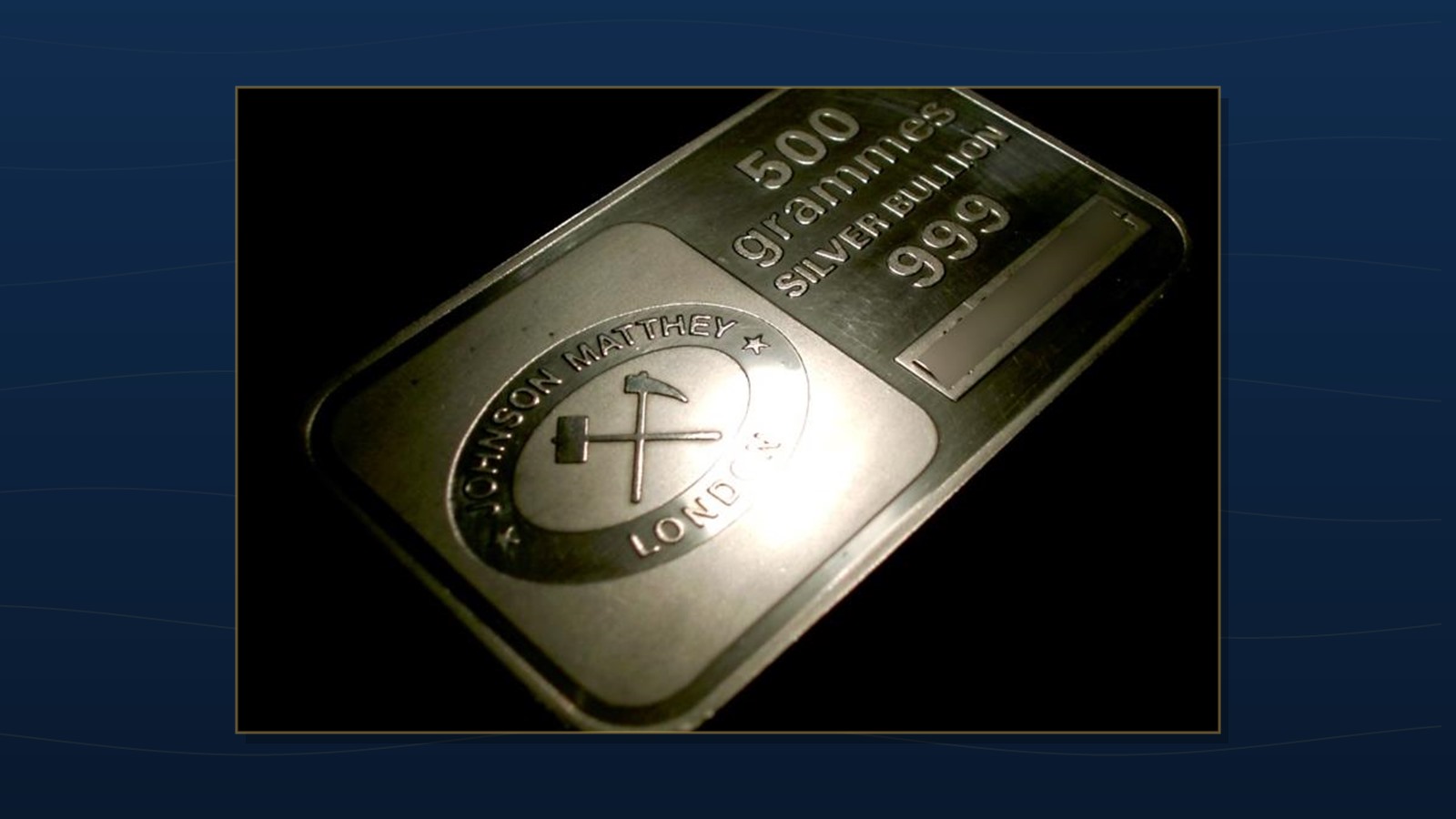
The Hunts bought silver in every form it took. They bought bars, and unlike almost every speculator before them they took delivery of the actual metal, flying much of it to vaults in Zurich on chartered jets. They bought futures contracts, promises of silver not yet delivered, using borrowed money. By early 1980, together with Saudi partners, they owned or held claim to around 200 million ounces, which contemporary estimates put at roughly a third of all the silver in private hands.
The price did what prices do when the supply is being swallowed. Silver began 1979 at about six dollars an ounce. On 18 January 1980 it reached $49.45.
The legend usually stops there, but one thing should be said for the brothers, because it is part of what the retellings leave out. It was a spectacular decade to be making that bet. Inflation was in double digits, there were American hostages in Iran, and Soviet tanks had just rolled into Afghanistan. That same January, gold set a record of 850 dollars an ounce with nobody cornering anything. The Hunts did not invent the silver mania. They rode a real one, and pushed it further than it could ever have gone on its own.
The exchange changes the rules
An exchange is not a force of nature. It is a club with a board and a rulebook. The board of COMEX, the New York exchange where silver futures traded, was drawn from the very brokerage and metals firms standing on the other side of the trade. Every dollar the price rose squeezed the short sellers, those contracted to deliver silver they did not yet own, closer to ruin.
Through the autumn of 1979 and into January the exchanges raised the cash deposit needed to hold futures and capped how many contracts one trader could keep. The Hunts kept buying. So on 21 January 1980 COMEX did something with almost no precedent: it declared that silver futures would trade for liquidation only. Existing positions could be closed and genuine industrial hedging could continue, but new speculative buying was banned.
Read that sentence again, because it is the exact centre of this story. A market in which buying is not allowed can move in only one direction. The record set on 18 January was three days old, and there would never be another. Bunker Hunt called it a conspiracy of the shorts, and he was pointing at something real, since men on the board that changed the rules had interests on the short side of the market. The exchange said it was protecting the system from a single family, and that was real too. Both descriptions fit the same facts. Anyone who watched brokers switch off the buy button during the GameStop squeeze of 2021 has seen the shape of it since. We told that story in The month a group chat took on Wall Street.
Ten weeks to Silver Thursday
What followed was the corner running in reverse. The Hunts had bought much of their silver with borrowed money, and a falling price meant margin calls, demands for immediate cash to cover a growing hole. That mechanism has its own article, How to lose more than you put in. Selling silver to raise that cash pushed the price lower, which produced the next call. Then the government sealed the last exit, because the Federal Reserve, at war with inflation, had leaned on banks to stop lending for speculation. One of the richest families in America could suddenly not borrow a dollar.
By late March silver was under sixteen dollars and the brothers were out of road. Their broker demanded more than a hundred million dollars they no longer had. On Thursday 27 March 1980 the firm began selling their collateral, the market understood exactly what that meant, and silver closed at $10.80, down almost four fifths from January. Wall Street spent the day genuinely afraid, because the Hunts' debts threaded through brokers and banks across the country, and a default that size could have dragged the healthy down with the sick. The answer was that 1.1 billion dollar loan, assembled by thirteen banks with the Federal Reserve's blessing and secured against the family's oil company. The men who had bet everything against paper money were rescued by it.
What it teaches
The aftermath took years to arrive and arrived all at once. In 1988 a jury decided the brothers had conspired to corner the market and awarded 134 million dollars against them. Within a month the two were in bankruptcy court, and they were later banned from trading commodities for life. Bunker's summary of the whole decade became famous: a billion dollars, he observed, was not what it used to be.
The easy reading is a morality tale about greed, and it is not wrong, only incomplete. The bet itself was, on its own terms, roughly right. Silver was genuinely scarce, inflation was genuinely destroying cash, and the metal the Hunts loved really did hold value better than the dollars around it. They were destroyed anyway, and by two things this site keeps returning to: borrowed money, which decides how long you are allowed to be right, and the rulebook, which is not weather. Rules are written by people, people hold positions, and a trade that threatens the people who write the rules is never as safe as it looks on paper.
The record they set had a long afterlife of its own. For forty-five years, $49.45 stood as the highest price silver had ever touched, through booms, crashes and one full internet age. It finally fell in October 2025, when silver crossed fifty dollars at last. It got there on its own. No brothers required.
This article is educational and reflects the views of the Wealth Stratum community. It describes historical events and general market mechanics, and is not financial advice or a recommendation to buy or sell any security. Always do your own research.