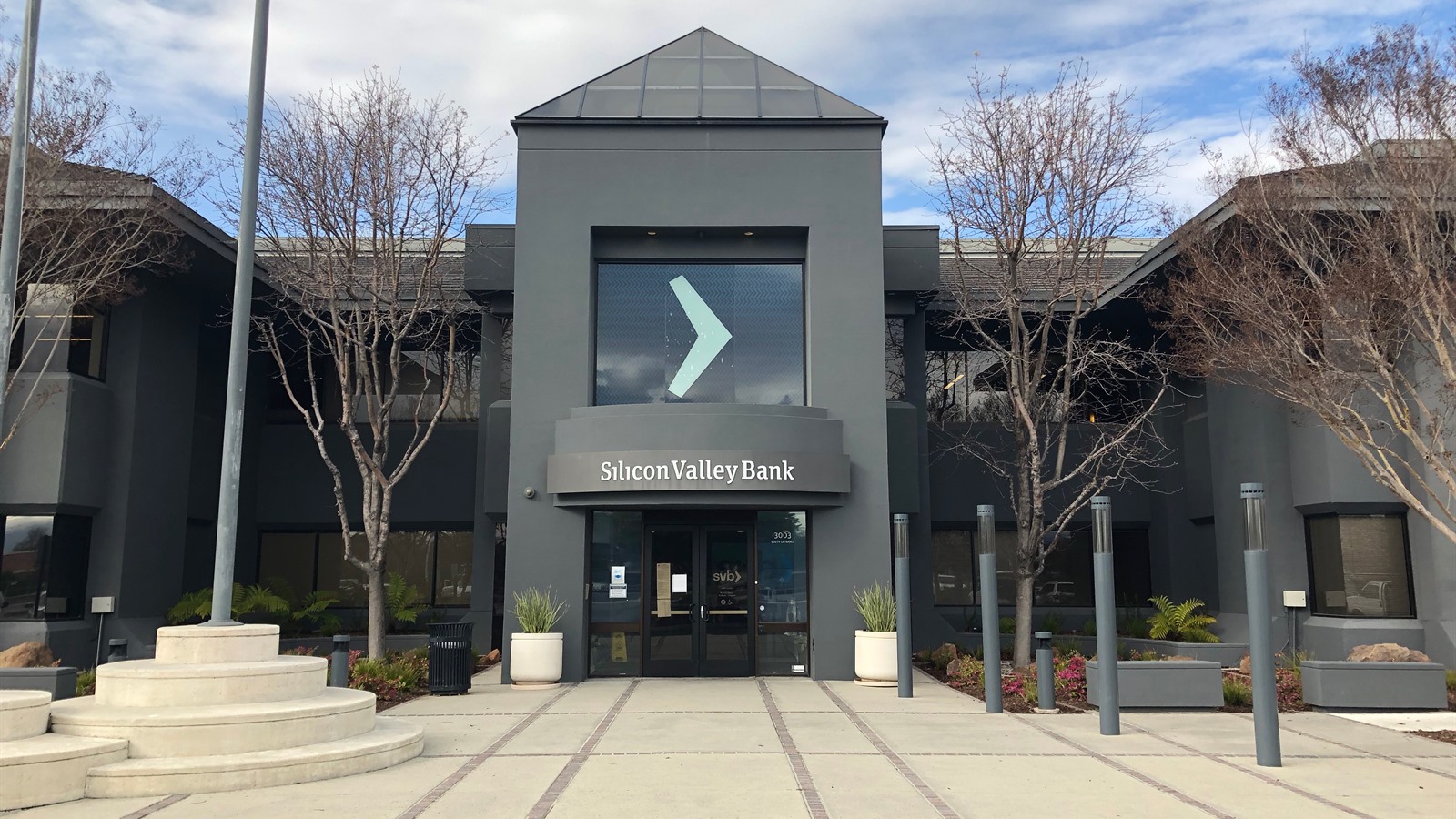
The bank run that had no queue
On 9 March 2023 depositors asked Silicon Valley Bank for 42 billion dollars, mostly through their phones, and by the next morning the bank was gone. The fastest bank run ever recorded left nothing to photograph.
For a century and a half, every bank run looked the same. A rumour started, and a queue formed: outside the Fourth National Bank in New York in 1873, outside thousands of American banks in the 1930s, outside the branches of Northern Rock in England in 2007. The queue was the run: you could see it, count it, and photograph it. Then, on 9 March 2023, the sixteenth largest bank in the United States suffered the fastest run ever recorded, and there was no queue anywhere. Its depositors asked for 42 billion dollars in a single day, from their laptops and phones, and the following morning the bank was seized before the middle of the day.
A bank is a promise, not a vault
To see why this can happen at all, you need one fact about banks that most people never quite absorb. Your money is not sitting in a vault with your name on it. The bank keeps a small fraction on hand and puts the rest to work, lending it out and buying assets that pay interest. That is not a scandal, it is the business model, and it is how every bank on earth operates.
The model has one condition, which is that depositors must not all want their money back on the same day, and on a normal day almost nobody does. But if enough people believe a bank is in trouble, they all ask at once, the bank runs out of cash long before it runs out of assets, and the belief makes itself true. That is a bank run. It does not need the bank to be rotten, only everyone deciding to move at the same time.
It did not die of risky bets
The popular version of what happened to Silicon Valley Bank is that a bank full of tech startups made reckless, tech-style bets and paid for it. The truth is close to the opposite. The bank died holding United States government bonds, the safest financial asset on earth.
The trouble began with success. Silicon Valley Bank was where the startup world kept its money. During the boom of 2020 and 2021, when interest rates were near zero and investors were flooding young companies with cash, its deposits roughly tripled in two years. That flood of cheap money was itself a leftover of the pandemic rescue, the story we told in The fastest crash and the fastest recovery. The bank had far more money than it could sensibly lend, so it did the cautious-looking thing and bought long-dated government and mortgage bonds, locking in rates of around 1.5%.
Then the world turned. Through 2022 the Federal Reserve raised interest rates faster than at any time in four decades, from near zero to above 4.5%, the lever we explained in Why interest rates move everything. When rates rise, older bonds paying the old rate lose value, because nobody pays full price for 1.5% while new bonds pay nearly 5%. By the end of 2022 the bank sat on a paper loss of around 18 billion dollars. The bonds were still perfectly safe in the sense that mattered least, because the government would repay every dollar at maturity. What they could not survive was the years in between.
Thirty-six hours
None of that had to be fatal. A paper loss only becomes real if you are forced to sell, and a bank with patient depositors could have held those bonds to the end. What Silicon Valley Bank had instead was perhaps the least patient depositor base ever assembled.
Its customers were not millions of scattered families but a few thousand startups and investment funds, concentrated in one industry, advised by the same investors and sitting in the same group chats. Because company accounts hold payroll rather than savings, the balances were huge, and close to nine dollars in every ten at the bank sat above the 250,000 dollar ceiling that government insurance protects. Uninsured money is nervous money. It has no reason to stay and find out.
On the evening of Wednesday 8 March the bank announced it had sold 21 billion dollars of bonds at a 1.8 billion dollar loss and needed to raise fresh capital. The announcement was meant to look prudent. It read as a distress signal. By Thursday morning venture funds were telling their companies to get out, the group chats were doing the rest, and the queue formed where nobody could see it, inside the banking apps.
In that single day, depositors asked for 42 billion dollars, roughly a quarter of the bank. By the close it had a negative cash balance of nearly a billion dollars. Overnight, requests for another 100 billion stacked up for Friday, which meant 81% of all deposits had asked to leave within about thirty-six hours. Regulators normally take a failing bank on Friday evening, after the doors shut. They seized this one in the middle of Friday morning, because there was not going to be an afternoon.
The speed, measured
The largest bank failure in American history is still Washington Mutual, in September 2008, and the run that killed it withdrew about 17 billion dollars over ten days. Silicon Valley Bank's depositors asked for two and a half times that between breakfast and the closing bell. Spread across a business day, 42 billion dollars is more than a million dollars every second, for ten hours.
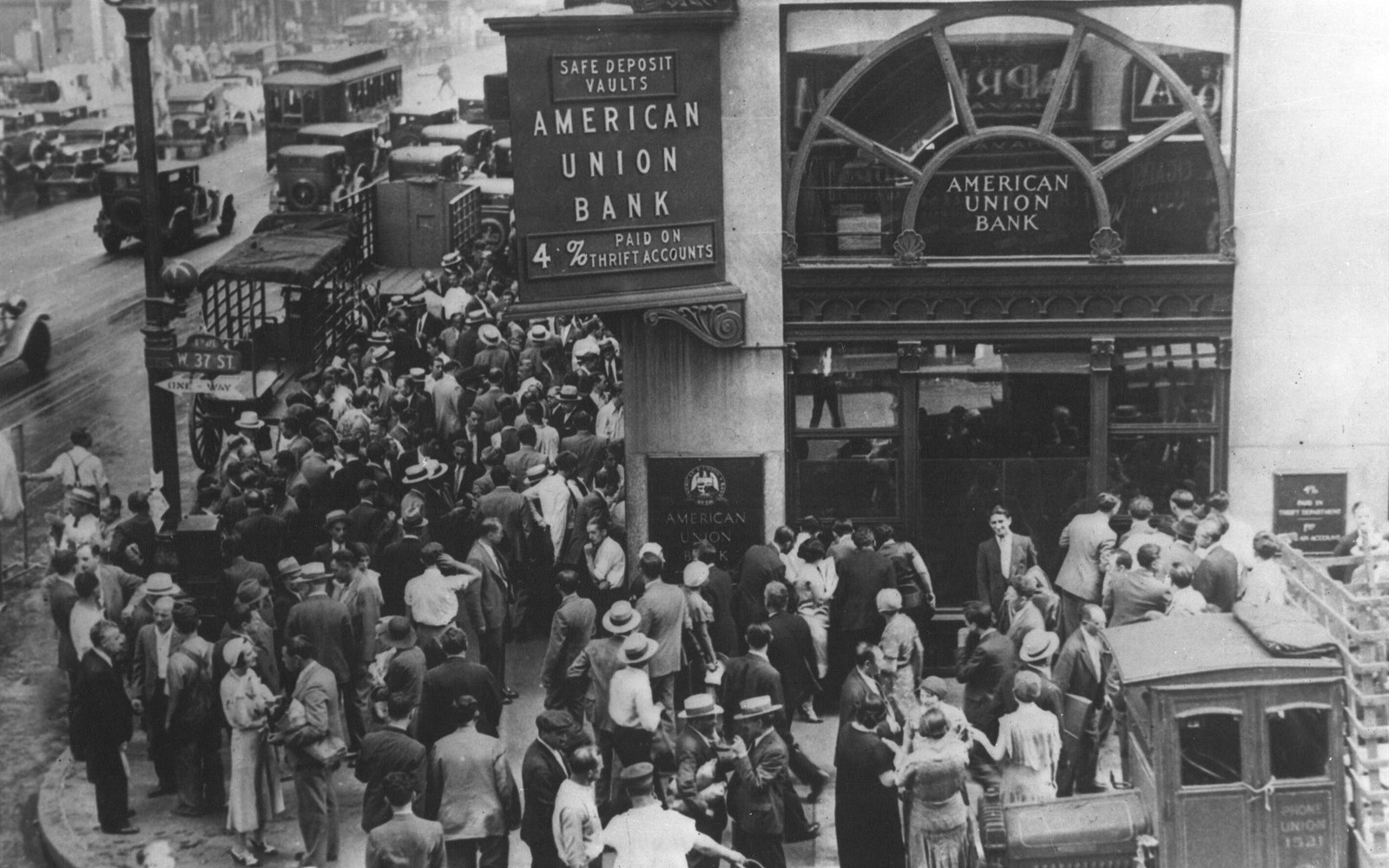
The queue was what used to make that impossible, because a physical run moved at the speed of a teller's window. Doors closed in the evening, weekends interrupted, and a bank could slow the line down while it found help. People standing in a queue could even be reassured out of it. A run through an app moves at the speed of typing, at any hour, from anywhere on earth. Every safeguard banking ever evolved quietly assumed that panic took time. In March 2023 panic stopped taking any.
The Sunday that stopped it
The weekend was spent on a bigger problem than one dead bank: what would happen at nine on Monday morning, when every uninsured depositor at every similar bank had just watched what being slow cost. On Sunday night the government answered. Every depositor at Silicon Valley Bank would be paid in full, insured or not, with the cost falling on a fund financed by the banking industry rather than on taxpayers directly. Shareholders got nothing, and a second bank, Signature, was closed the same day.
It mostly worked. The panic cooled, though the fear kept hunting for the next weakest bank and found one, First Republic, which failed seven weeks later. The guarantee saved the depositors. Nothing could save the idea that a queue was something a bank would always see coming.
What it teaches
The word safe should never travel alone, because it always hides a second question: safe from what? Government bonds are safe from default and helpless against rising interest rates. Silicon Valley Bank held the safest asset on earth at the wrong time, and it was enough to kill it.
A bank is also only as calm as its depositors, and identical depositors are really one depositor. A million unconnected savers panic slowly, if at all. A few thousand companies with the same advisers and the same chats move as a single animal. The bonds were the symptom. The concentration was the disease.
And the old speed is never coming back. In 1873 fear moved at the pace of a crowd, so banking built its defences out of doors, hours and weekends. In 2023 fear moved at the pace of a group chat, and every one of those defences turned out to be a fence against something that no longer walks. The queue did not disappear because people stopped panicking. It disappeared because panic stopped needing one.
This article is educational and reflects the views of the Wealth Stratum community. It describes historical events and general market mechanics, and is not financial advice or a recommendation to buy or sell any security. Always do your own research. Cover photo: Minh Nguyen, CC BY-SA 4.0, via Wikimedia Commons. 1932 photograph: US National Archives, public domain.