Why a stock jumps just for joining a list
A committee adds a company to an index and the shares rise sharply, without the business changing in any way at all. The reason is one of the strangest forces in modern markets.
Every so often a company's shares rise ten per cent in an afternoon for a reason that has nothing to do with the company. No product launched. No results were published. Nobody discovered anything. All that happened is that a committee announced the business would be joining a stock market index, and the shares moved as though something real had occurred. Understanding why is one of the fastest ways to see how much of the modern market runs on obligation rather than opinion.
The list is not a scoreboard
An index such as the S&P 500 sounds like a measurement. In practice it is a list, and somebody decides what goes on it. There are rules about size, profitability and how freely the shares trade, but within those rules a committee makes a judgement, and a place on the list is not automatic.
Slots open for unglamorous reasons. A member gets taken over, or moves its listing, or shrinks below the threshold. When a gap appears, the committee fills it, and one company's ordinary Tuesday becomes another company's very good Thursday.
The buyers who have no choice
Here is the mechanism, and it is worth reading twice, because it explains far more than index inclusion.
Enormous amounts of money are invested in funds that simply track an index. Their entire promise is that they will hold exactly what the index holds, in the same proportions. That promise is the product. It is why they are cheap, and it is why people trust them.
The consequence is that the moment a company joins the list, every one of those funds has to buy it. Not because a manager admires the business, or has read the accounts, or has any view at all. They have to buy it because they promised to mirror the list, and the list has changed.
So a wave of buying arrives that carries no information whatsoever. It is not a judgement about the company's future. It is a contractual obligation being carried out by a very large number of funds at once, and prices rise the way they always do when many buyers meet limited sellers.

Why the move often fades
If this seems like free money, note that a great many professionals have had the same thought. Traders try to guess additions in advance and buy before the announcement, which pushes some of the gain earlier and makes the jump on the day smaller than it used to be.
More importantly, the buying is a one off. The tracking funds buy once, to get their holdings right, and then they are done. There is no second wave, because the obligation has been satisfied. Once that demand has passed, the share goes back to being priced on what the business actually earns, and a good deal of the pop can drain away over the following weeks.
This is the honest version of the story. Joining an index is genuinely worth something, because it brings permanent demand from funds that must hold you and attention from investors who now see you. It is not worth a permanent ten per cent, and treating the announcement as a guaranteed profit is how people get caught buying at the top of the wave.
It happened again last month
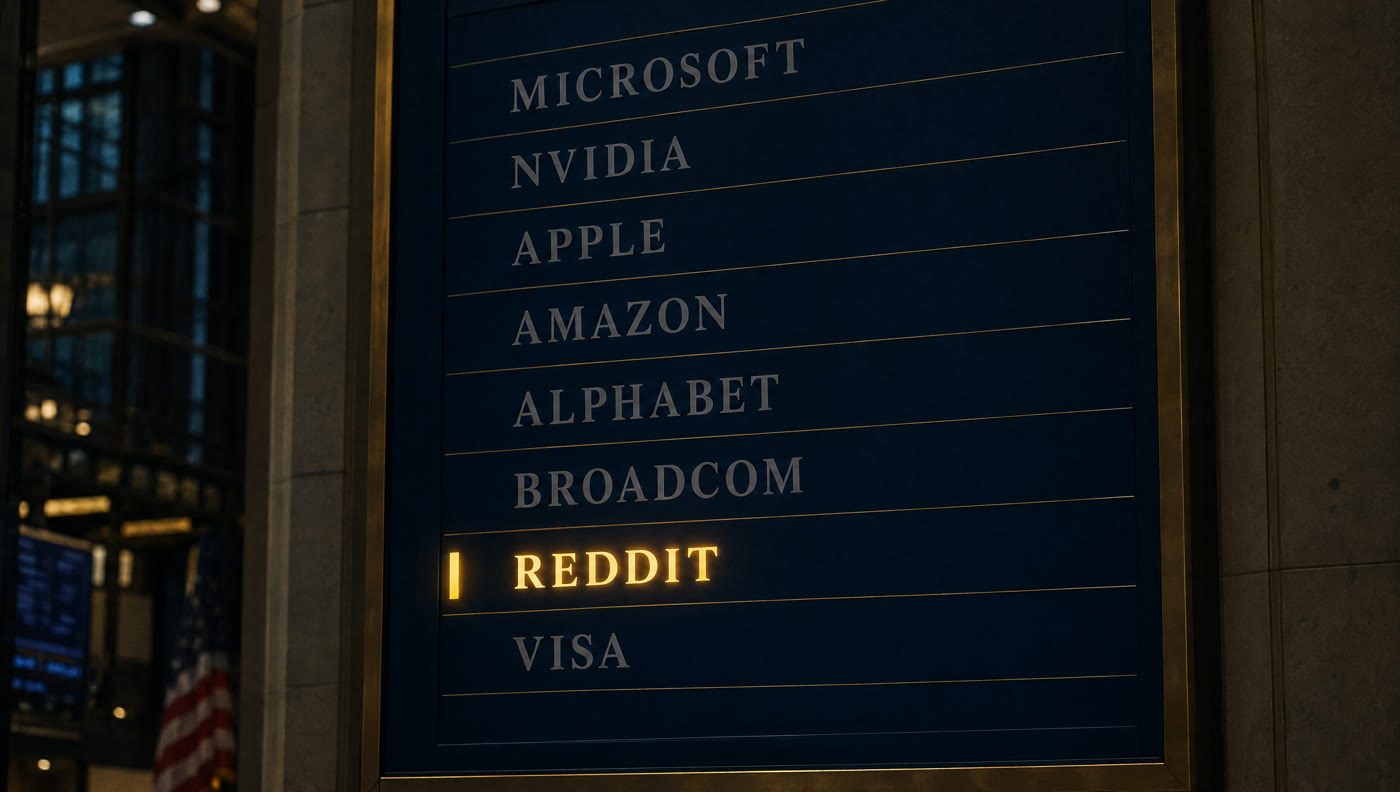
This is not a historical curiosity. In August this year the committee announced that Reddit would be joining the S&P 500, and the shares rose about eleven per cent on the announcement.
The slot had opened for exactly the mundane reason described above. One member of the index was being bought by another member, which left a gap, and the gap had to be filled by somebody. Nothing about Reddit's business changed between the Wednesday and the Thursday.
One detail from that week is worth keeping straight, because it catches people out. The announcement came on the Thursday and the shares moved on the Thursday, but the company did not actually join the index until the following Tuesday. The price responds to the news, not to the event. By the time the obligated buying actually happens, the market has usually finished reacting to the fact that it is going to happen.
The wider point
Step back and index inclusion is a demonstration of something people rarely say out loud. A large and growing share of all buying in the market is done without any opinion about the thing being bought.
We wrote in What the S&P 500 actually is that the index is a curated list rather than a law of nature. This is the same fact viewed from the other side. If the list is curated, then being added to it is a decision, and decisions made by committees can move prices exactly like news can.
None of this makes index funds a bad idea. They remain the most sensible starting point most people have. It is simply worth knowing that when you own one, part of what moves your money is not analysis at all. It is millions of dollars obediently doing what a list told them to do.
This article is educational and reflects the views of the Wealth Stratum community. It explains a general investing concept in plain terms and is not financial advice or a recommendation to buy or sell any security. Always do your own research.