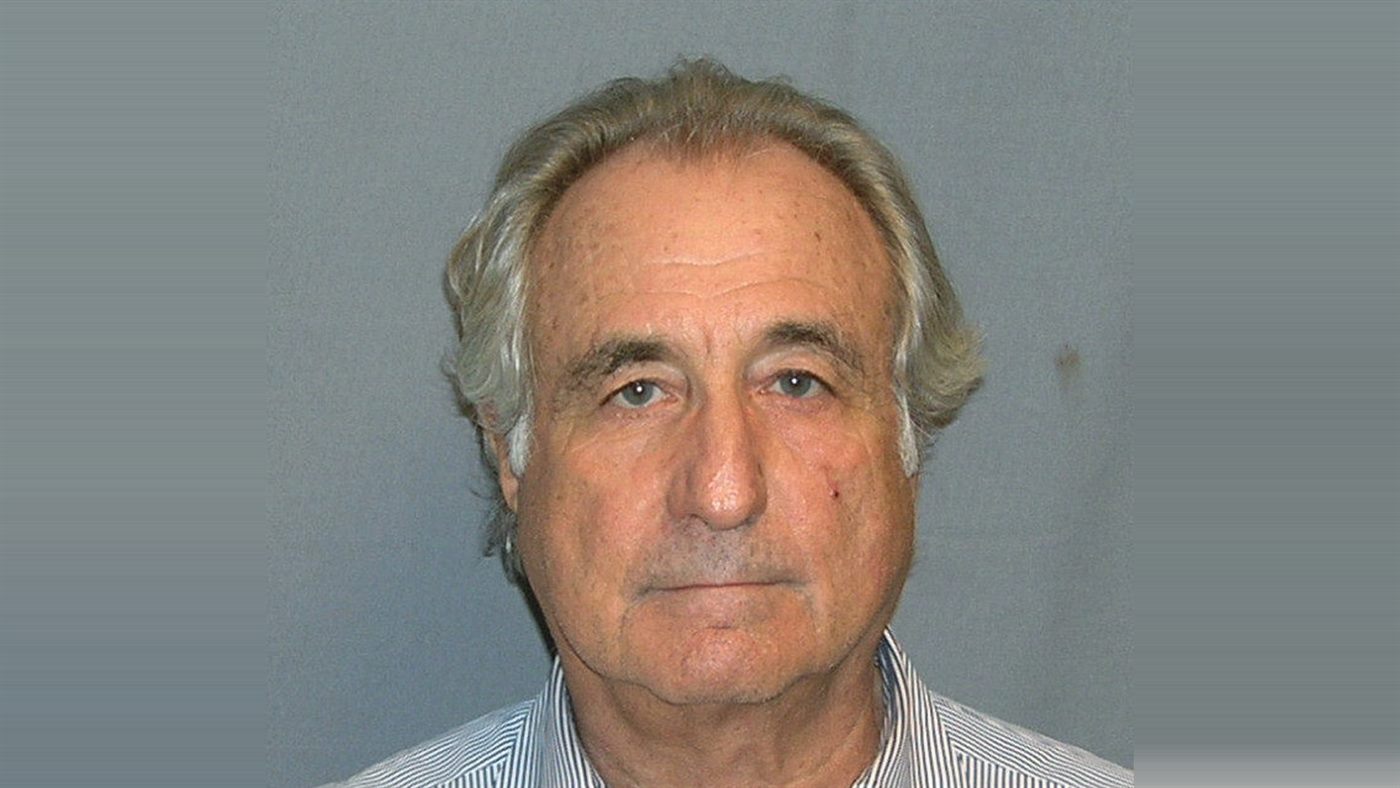
The man who warned them for nine years
Bernie Madoff ran the largest Ponzi scheme in history while being one of the most trusted names on Wall Street. One analyst spotted it almost a decade early, and nobody listened.
For years, if you had money and you wanted it managed by the safest pair of hands on Wall Street, one name kept coming up. It was Bernie Madoff, who had once been the chairman of the Nasdaq stock market itself. His fund never chased wild returns or made headlines. It simply went up, quietly and steadily, year after year, in good markets and bad alike. That reputation is exactly why the whole thing worked for as long as it did, and it is why it became the largest Ponzi scheme in history.
The most trusted man on Wall Street
Madoff was not some obvious huckster in a loud suit. He was finance royalty, a man who had helped build the Nasdaq and then served as its chairman. Charities, universities, retirees and some of the most sophisticated investors in the world lined up to hand him their savings. Getting into his fund was treated less like a transaction than like an invitation into a club.
The irony is that his respectability was not a side detail. It was the product he was really selling, because nobody thinks to audit the person everyone around them already trusts.
The number that was too smooth
Here is the strange part. Madoff's returns were never outrageous, and he was not promising to double anyone's money. He reported something around ten percent a year, which is a good result but hardly the kind of number that screams fraud.
The warning sign was never how high the returns were, but how smooth they were. Real investing is bumpy, and even the greatest investors alive have bad months and genuinely ugly years. Madoff's results formed a near perfect line sloping gently upward, with barely a down month in it. That held even while the market was falling apart all around him, and it was the whole tell.
The man who did the math
One person saw it early. Harry Markopolos was a financial analyst whose own firm had asked him to reproduce Madoff's returns. He sat down with the numbers and could not make them work at all. This was not a case of something looking slightly risky, but of something being genuinely impossible. The market moves Madoff claimed to be trading around simply did not support the results he was reporting.
It is worth understanding what he actually caught, because it was not a hunch. Madoff said he was running a strategy known as a split-strike conversion. In plain terms, that means buying a basket of large shares and then using options contracts to fence in the result. It limits how far the value can fall, and how far it can rise. That is a real strategy used by real funds, and the problem was never the idea itself but the sheer size at which Madoff claimed to be running it.
To run that strategy across the money he said he managed, Madoff would have needed an enormous quantity of index options. So Markopolos went and looked at how many of those options actually existed. There were nowhere near enough. The entire market for them was a fraction of what Madoff's fund alone would have required, and none of the trades were anywhere to be seen. That matters, because a trader operating at that size cannot hide when the market is too small to swallow him quietly. The strategy Madoff described could not have been carried out by anyone, at that size, anywhere.
Starting in 2000, Markopolos took his concerns to the Securities and Exchange Commission, the regulator whose entire job is to catch exactly this. He walked his findings into their Boston office, then came back the following year with more documents. In November 2005 he submitted a memo whose title left no room for interpretation: "The World's Largest Hedge Fund is a Fraud." It ran to twenty one pages and listed thirty separate red flags, built on more than fourteen years of Madoff's reported trading.
Why nobody listened
They did not act, and the reasons were layered rather than simple. Part of it was that Madoff was too respected to suspect. Part of it was that the fraud was genuinely well hidden, wrapped inside a real and legitimate looking business that did ordinary trading for ordinary clients. And part of it, honestly, is that a warning which sounds insane is easy to file away and forget, especially when the person it accuses used to run the Nasdaq.
There is also a quieter problem here, and it is the one worth carrying away. Checking a claim like this properly requires someone who can follow the mathematics. It then requires the confidence to act on what that maths says, even when everyone else in the room finds the conclusion unthinkable. Markopolos had the first of those. The people he was writing to did not reliably have the second.
So the scheme did not merely survive, it grew for years, pulling in more and more money right under the nose of the people who had already been warned. Every year it went unexamined made it larger, and every year it grew made it harder for anyone to admit that it had been missed.
How it ended
In the end no investigator brought Madoff down, the 2008 financial crisis did. As markets crashed, too many of his investors asked for their money back at the same time, reportedly around seven billion dollars between them. The money was not there, because it never had been.
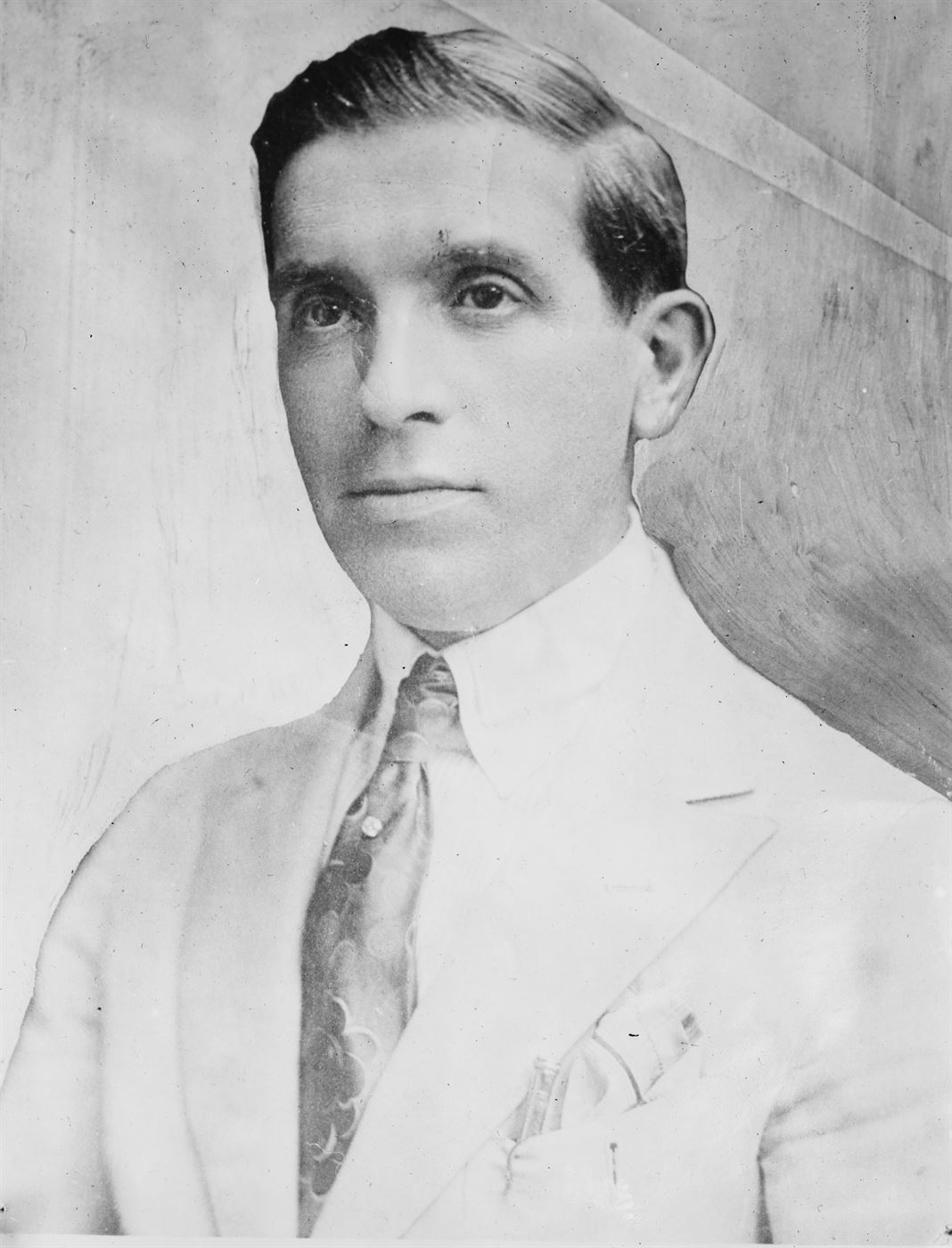
This is what a Ponzi scheme actually is. There is no real investment engine underneath it, and it simply pays older investors with the money handed over by newer ones. It survives only for as long as fresh money keeps arriving. It takes its name from Charles Ponzi, who ran the trick back in 1920, and Madoff ran that very same idea on a scale Ponzi could never have dreamed of.
In December 2008 he confessed to his own sons that the whole business was, in his words, one big lie.
It was all just one big lie.Bernie MadoffConfessing to his sons in December 2008, days before his arrest, after roughly $7 billion of withdrawal requests arrived and the money was not there.
The account statements his investors were holding said their money was worth around sixty five billion dollars, and that entire number was fiction. In 2009 he was sentenced to a hundred and fifty years in prison, where he died in 2021.
The largest Ponzi scheme ever uncovered
What the paperwork claimed, and what was actually there.
- Value shown on investor statements
- about $65bn
- First detailed warning to the SEC
- 2000
- Withdrawal requests that broke it
- about $7bn
- Sentence, handed down 2009
- 150 years

The lesson
The useful part of this story is not that some people are crooks, because you already knew that. It is the exact shape of the warning sign, which is not the one most of us are watching for.
We are trained to be suspicious of returns that look too good, of the get rich quick promise and the number that is obviously too high to be real. Madoff never offered any of that, and his trap was the precise opposite, because his returns were too steady, too calm and too reliable. Anything that only ever goes up, with no bad days at all, is not quietly beating the market so much as it is usually hiding something.
And there is a second lesson, quieter but just as useful. Being respected is not the same as being checked. The more everyone assures you that someone is safe, the more it is worth asking the boring question yourself: who is actually verifying this, and how would we even know if it were not true?
This article is educational and reflects the views of the Wealth Stratum community. It is a simplified retelling of real events, drawn from public records, regulatory filings and contemporary reporting, and is not financial advice or a recommendation to buy or sell any security. Always do your own research.